Tuesday, September 17, 2013

A Tribute to Sunila


Celebratory Memoirs Of The Life Of Comrade Sunila Abeysekera

By: Lionel Bopage

Last Thursday, I was reading an article about Joan Jara, the widow of renowned Chilean activist, singer, songwriter and theatre director Victor Jara, and her family. They are seeking long-delayed justice for the kidnap, torture and brutal murder of Victor in 1973, by the Chilean secret police. My memories immediately went back to November 1977, when all political prisoners including me were released in Sri Lanka. A couple of months later, comrade Sunila Abeysekera and I were discussing at her parents’ house in Nawala, the inspiration Victor Jara brought to those who were working for social change for a better world. This morning, Chitra and I were greatly saddened by the news that comrade Sunila, one of the best, exceptional and inspiring human rights activists of our time had passed away in Sri Lanka.

I first met Sunila in late 1977 at a bookshop in Colombo, to mainly discuss the formation of a grass roots based human rights organisation. My first impression of her is indelibly etched in my mind. I saw an attractive young woman of about 25 years of age, vehemently striking a manual typewriter trying to finish off an article she was writing. I remember her apologetically asking me to wait a little while. That was our first encounter.
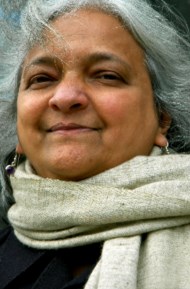
Sunila
Later on, I came to know that she had deep roots in theatre and music. In the 60s and 70s, she had taken the Sinhala theatre by storm with her haunting voice and breathtaking performances. She had been conducting notable performances on stage in her early twenties, in Indian classical and Kandyan dance. In the seventies, she had commenced lending her voice to film music and had also become a familiar figure at concerts. Even to date, the beautiful melodies ‘Udumbara Hinahenawa’ (Udumbara smiling) in ‘Bambaru Avith’ (Wasps are Here) and ‘Hemin Sare Piya Sala’ (Flying Slowly) in ‘Hansa Vilak’ (A Swan Lake) continues to resonate and be in demand in Sri Lanka.

How did such a vibrant artistic career in film and music give way to human rights activism? Human rights had emerged as a major issue in the 1970s, as successive governments in Sri Lanka responded to youth militancy in the south and north with repressive legislation, arbitrary arrest and detention, torture and curbs on the freedom of expression, including censorship. She had been active in civil society groups since the late 1970s, untiringly working for the release of political prisoners and advocating a negotiated political solution to the national question.

The 1971 youth insurrection had left an indelible mark on Sunila’s conscience. In her early 20s, Sunila with other young colleagues had started visiting young detainees held in Sri Lankan prisons. Taking them food and clothing, letters from family, she gradually became involved with their legal defence. It was at this time that she left the stage and began her life of activism.

When we finally organised the ‘Human Rights Organisation’ (HRO), its President was Regi Siriwardena, a former LSSP veteran, with Sunila as the Secretary. The HRO opened branches in rural areas, and the JVP was also looking for recruits for the HRO among the clergy and the intellectuals. Sunila had known Chitra before I came to know her. It was while working in these projects that Sunila became the intermediary of my relationship with Chitra leading to our life partnership.

I recollect grabbing Sunila from a film studio in Narahenpita, where she was recording the theme song of the film ‘Bambaru Avith’, to record ‘Vimukthi Gee’ songs at Ogee Studio in Bambalapitiya. On another occasion, I attended her singing, when she contributed to the popular drama ‘Angara Ganga Gala Basee’ (River Angara Flows Down). However, her appearance on the ‘Vimukthi Gee‘ stage in the late seventies and early eighties was very different from her previous role as an artiste. Now she was singing for the ordinary folk in villages and towns where she with other singers and musicians, sang songs of struggle, protest and liberation. She was the best female vocalist in the troupe.

At the time, she was also working as a writer and translator for the journal ‘Red Power,’ which I was editing. She also did political work on behalf of the party in the lower middle and upper-class niches in Colombo. This was the time, when the second wave of feminism had reached a high water mark in Western countries. The JVP manifesto supported the rights of women in terms of a fair wage and appropriate working conditions. The idea of the personal being political, a woman being an independent sexual being, that the home was just as exploitative as the workplace and that patriarchy, not capitalism, was the primary cause of the oppression of women had not touched the political consciousness of a JVP cadre.

Therefore, Sunila’s journey had several major hiccups.  Being brought up in the better part of Colombo and having received a western tertiary education, her work and cultural ethic was so different to the rural Sinhala, Buddhist, semi-proletarian and lower middle-class background of the average JVP cadre. They were extremely conservative and patriarchal in their thinking on cultural issues. Sunila was passionate, bohemian and demonstrative; we of the JVP were the complete opposite.  Ultimately, the relationship between her and the party came to an abrupt end. Later, in the eighties, I met Sunila a couple of times, but the intensity of our friendship has not been the same. Yet we continued to keep in touch.

In my mind, this did not and should not diminish the role she played in defending human rights including the rights of women and non-majoritarian communities in Sri Lanka. She was a powerful figure not only in the Sri Lanka women’s movement of Sri Lanka, but also of the international movement. She played a major role in the collective effort to draw the UN’s attention to the need to include women’s concerns, voices, and perspectives in peace building and conflict-transformation. Her work extended to the situation of civilians in war-affected areas, the rights of communities such as sex workers, people living with HIV/AIDS, and lesbian, gay, and transgender persons, and sexual and reproductive rights of women.

During the periods of armed conflict in Sri Lanka, Sunila denounced human rights violations committed by all parties to conflicts. She was one of the first Sri Lankans to raise the issue of disappearances in the nineties, when hundreds of young people, particularly in the South were disappearing at the hands of the State and the JVP. She addressed the United Nations Human Rights Council at its opening session in 2006. Being critical of the government, she shrugged off the risks that posed to her own safety. She was branded a traitor and an enemy of the state. A woman from the Sinhala majority defending the rights of Tamils, they could not stand. However, she never wavered. Hers was an uncompromising struggle against the entrenched culture of impunity of withholding accountability of those who had been responsible for enforced disappearances and killings of civilians.

She began highlighting rights violations in Sri Lanka, perpetrated under the guise of the Prevention of Terrorism Act and later through the promulgation of Emergency rule and the various Emergency regulations. Her work also included protection of the displaced due to armed conflict. At peak periods of repression, she arranged to document disappearances, and frequently took this information to the UN and other international agencies. Because of her fearless and tireless advocacy and commitment to human rights and social justice, she faced death threats and had to leave the country, as her life was in danger in the nineties and in recent times. In recognition of her human rights activism, she was awarded the 1998 UN Human Rights Award for Asia and the Pacific.

The last time we sang together as a group was in the year 2008, in Colombo in commemoration of those who laid down their lives during the April 1971 insurrection in Sri Lanka. In 2010, Chitra and I had the occasion to visit Sunila in Malaysia, when she was undergoing treatment for cancer. She was as determined as ever to carry on with her struggle for human rights and social justice.

Sunila was an enormously courageous and inspiring friend, a caring mother, a tireless and committed activist, a professional artiste, writer and critic, and an ardent feminist. She struggled for four decades seeking justice for victims of human rights abuses in Sri Lanka. We, including all those who suffered and continue to suffer human rights violations are going to miss her deeply. The only way to fill the vacuum she has left and her legacy is to further strengthen our role in the protection of human rights and unswervingly commit to the cause of social justice.

We extend our sincere and most heartfelt sympathies to her family and friends. Her friendship, commitment to social justice and activism on behalf of the dispossessed will be solely missed by us all.


Courtesy: Colombo Telegraph

Syed Jamil Ahmed: A Brief Profile


Syed Jamil Ahmed: A Brief Profile
Syed Jamil Ahmed (b. 1955) is a theatre director based in Bangladesh and Professor at the Department of Theatre, University of Dhaka. He graduated from the National School of Drama (New Delhi, India) in 1978, received his MA in Theatre Studies from the University of Warwick (UK) in 1989, and his PhD (on “Indigenous Theatrical Performances in Bangladesh: Its History and Practices”) from the University of Dhaka in 1997. He founded the Department of Theatre and Music at the University of Dhaka in 1994 and served as its Chair till 1997. He has served as a visiting faculty at the Antioch College, USA (1990), King Alfred’s University, UK (2002), San Francisco City College, USA (2005) and Jadavpur University, India (2011). He has also given numerous workshops on theatre in Bangladesh, India, Pakistan, Nepal, and Germany, presented research papers in numerous conferences, and has over 60 research articles to his credit. Some of his articles have been published in TDR: The Drama Review, New Theatre Quarterly, Asian Theatre Journal, Inter-Asia Cultural Studies, South Asian Popular Culture, Research in Drama Education, Asia: Magazine of Asian Literature, and Asian Ethnology. His book-length publications are Hajar Bachhar: Bangladesher Natak O Natyakala (1995), Acinpakhi Infinity: Indigenous Theatre in Bangladesh (2000), Unnayan Natya: Tattva O Prayog (2001), In Praise of Niranjan: Islam Theatre, and Bangladesh (2001), Reading Against the Orientalist Grain: Performance and Politics Entwined with a Buddhist Strain (2008), and Applied Theatricks: Essays in Refusal (2013). Currently, he is working on a book-length publication on folkloristics of Bangladesh. He received two Fulbright fellowships (in 1990 and 2005), and has travelled extensively in North America, Europe, Asia and Africa. His major areas of research interest are Indigenous Theatre of South Asia and Applied Theatre.
Syed Jamil Ahmed’s performance credits include direction of over 20 plays including The Wheel by Selim al-Deen (English translation of Chaka, jointly directed with Denny Partridge) at the Antioch College, Yellow Springs, Ohio, USA in 1990, and in Dhaka in 1991; an adaptation of Bisad Sindhu (a 19th century prose narrative on the Karbala tragedy by Meer Musharraf Hussein) in Dhaka in 1992; Kamala Ranir Sagar Dighi (devised on the indigenous theatre form of Pala Gan performed by Islamuddin Palakar) at the Department of Theatre and Music, University of Dhaka in 1997; Ek Hazar and Ek Thi Rate (an adaptation of A Thousand and One Nights) with Tehrik-i-Niswan, in Karachi in 1998; Behular Bhasan (an adaptation of the Manasa-mangal) with the Department of Theatre and Music, University of Dhaka in 2004, 2005 and 2010; Pahiye  (Hindi translation of Chaka) at the National School of Drama, New Delhi, India in 2006; Sang Bhang Chang (devised on the indigenous theatre form of Sang Jatra) with the Department of Theatre, University of Dhaka in 2009; Shakespeare’s Macbeth at the National School of Drama, New Delhi, India in 2010; and Shyamar Udal, an adaptation of Rabindranath Tagore’s Shyama, produced by Rangakarmee, Kolkata, in 2012. Many of these plays have travelled to theatre festivals held in Kolkata, Agartala, New Delhi, and Islamabad. He has also set designed over 70 performances and lighting for over 80 performances in Bangladesh, India and Pakistan.

Saturday, August 10, 2013

Drama Director Sunil Chandrasiri passes away

Drama Director SunilRenowned stage drama director Sunil Chandrasiri suddenly passed away.

Mr. Sunil Chandrasiri entered stage drama through Jayalath Manorathne’s ‘Puthra Samagama’ and directed ‘Ginidandu Sevana’, Bheema Bhumi’, ‘Nishbdvenu’, Samavenna Varadeemak’, ‘Don Juan’, ‘Mayadevi’ and ‘Jana Mithuro’.
The last drama he directed ‘Adaraneeya Sanvadayak’ won the best direction and best production awards at the National Drama Festival and his ‘Sindu Kirillee’ won the award for best translation.

Wednesday, May 15, 2013

Gratiaen Prize has ‘leavened Sri Lanka’s cultural scene’

Gratiaen Prize has ‘leavened Sri Lanka’s cultural scene’


article_image
Text of the address by Dr. Jayantha Dhanapala, chairman of the panel of judges, at the awarding of the Gratiaen Prize 2013 in Colombo on May 4, for what is adjudged as the finest creative work in English for the year, by a resident Lankan.

The Gratiaen Prize was established twenty years ago and in these two decades, not even its most caustic critics can deny that it has leavened our cultural scene. Creative writing in English contributes significantly to the contemporary Sri Lankan ethos far out of proportion to the minority that engages in it as practitioners and those who appreciate it as readers. The far-sighted companion H.A.I. Goonetilleke Prize for the best translation ensures the cross-fertilization of the writing talent in our country in all three languages. The debt of gratitude to Michael Ondaatje for establishing this prize, unlike our foreign debt, will be borne for decades to come with pleasure. Ondaatje identified one of his aims in making this generous endowment as being, "to celebrate and test and trust ourselves. To select and argue about the literature around us. To take it seriously, not just to see it as a jewel or a decoration." Four years into the period of healing and reconciliation after the end of our 30-year trauma of conflict, the focus on the role of the creative writer in our society has intensified. We do need "to celebrate and test and trust ourselves" as equal citizens in a richly diverse nation with lessons to be learned from an ancient history. My thanks to the members of the Trust for honouring the purposes of Michael Ondaatje so conscientiously and so efficiently. I must also thank the sponsors - Standard Chartered - for this meaningful demonstration of their corporate social responsibility.

On the 22nd of March, my colleagues on the panel of judges and I announced the short list of 5 works of creative writing from among the 59 entries received this year in the annual competition for the Gratiaen Prize. On behalf of the panel of judges I thank all the participants in the competition. We recognize the hard work that went into your writing. The short listed five are, undoubtedly, works of outstanding literary merit of which Sri Lanka can be proud. Of these, three were novels; one a collection of poems and one the script of a play. If creative artists are indeed the antennae of a society then these five writers have transmitted messages to us based on their imaginative transmuting of their experiences of contemporary Sri Lanka into novels, poems and a play that can give us joy and cause for deep reflection.

We have already made our assessment of the five short-listed works in the citations which were read out on March 22nd and which, I believe, have been reproduced in the media obviating the need for me to repeat them. Four of the short-listed works can be read and appreciated by the reader. Reading the script of a play however is a limited experience. The script comes to life when it is acted on stage and the play Kalumaali is best appreciated when staged. Reading the script one has the impression that this is therefore like a musical score awaiting performance since much is left to the reader’s imagination. The theatrical rendition of a play adds a special dimension and the judgment of the script as words on a page in comparison with a novel or a poem seems to me to be placing the playwright at a disadvantage. A separate prize for the scripts of plays may be considered at some future stage. Despite this the lyrical parts of the play, the interplay between magic and reality and the tensions of domestic life do come out in the reading of the play Kalumaali.

Together with the scripts of plays I think a separate prize should be awarded for poetry as in other countries. The comparison between the prose of a novel and the words on the page of a poem is an invidious one. The dimensions are different. In my days as a student of literature - a very, very long time ago and I quote from memory- I recall reading one time Poet Laureate of the UK Cecil Day Lewis’s description of a poem as, "a concentration of words, thoughts and feelings." In Malinda Seneviratne’s slim volume of poems, Open Words are for Love-Letting, there is indeed a concentration of thought and emotion in powerfully charged language. The evocativeness of his poetry cannot be matched too easily where the poetic voice is able to convey a touch and tone beyond the personal. The imagery of Seneviratnepoems holds the reader in a "heart-palm", to use his phrase, while the rhythm of his poems subtly supports his themes.

As judges we looked in all the pieces of writing for sensitivity to the social environment; for a fusion of innovative thought and authentic experience conveyed vividly through image and idiom that was distinctively original and for a freshness of themes and a distinctive approach to them. With the novels, the sharp delineation of character and a coherent structure was important. An innovative use of language and the avoidance of clichés and stereotype descriptions was a vital aspect in all the short-listed works identified by us.

Of the three novels, It’s not in the stars, presents a unique perspective of our society with insights into the Malay community but without sentimentality. It does not balk at facing the tough harshness of middle class life and its preoccupations and persuasions, the mundane and yet enduring nature of love, sex and marriage. It presents a complex picture of the 80s, and 90s with the dark events of July 1983 as a seminal event shaping the plot and the characters in it as they live their lives here and abroad.

The Professional was a bold text both for its innovativeness and subject matter. It presents a sensibility of alienation that cuts across generations and multiple locations; traversing once again marginalities ranging from being a down and out immigrant and a hustler in London to an ageing man, desiring and yet acutely aware of the transience of those desires. The unsentimental creation of a cityscape of Colombo where marginal people are central to the plot provides an aura of loneliness that the characters feel without ever naming it as such. One of my co-judges said," The two older women reminded me of the daughters in The daughters of the Late Colonel by Katherine Mansfield, though these two women are more worldly wise than Mansfield’s Constance and Josephine."

Finally, Playing Pillow Politics at MGK is an unusual and extraordinary novel." Our citation is self-explanatory. The bold, unconventional and innovative story telling is indeed impressive. It is a work of our times and yet not just of our times. It is exciting and formally quite inventive, mixing realism with the allegorical. It is also a work that touches upon working class lives and handles that well without descending into the usual clichés and stereotypes that are often substitutes for authentic experience. Instead it provides a formally daring perspective on urban social and political life. It is quite successful in pulling together different strands of the narrative together, mixing genres quite easily.

Conceived as a story told by an invalid boy to a CFL bulb, it portrays life in the diverse and fascinating community that inhabits the mountain Maha Geeni Kanda (MGK). The dismantling of the community and its replacement with a boutique hotel - the Cassia Palace - is the backdrop against which we are introduced to the characters in the community, the interaction amongst them and their turbulent life stories. Dedicated to the Federation of University Teachers’ Association, the author also includes myth loving people and myth denying people in his dedication thus encompassing a broad swath of his readers. The novel begins and ends with brief but eloquent quotes from the poetry of the 1996 Nobel Prize winner for Literature – the Polish poet Wislawa Szymborska. Her Nobel citation referred to, "poetry that with ironic precision allows the historical and biological context to come to light in fragments of human reality". Writing in prose, Medawattegedera does use irony very skillfully in the episodes he gives us depicting the lives of the MGK dwellers.

The novel succeeds best at the level of allegory. It is therefore an extended metaphor of our community with all its political, economic and social complexities treated with supreme irony - witty at times and at other moments with deep sympathy. Even when he is amusing in his description of the MGK characters Medawattegedera is not laughing at them but compels us to empathize with them. Scene setting is done with deft strokes whether it is the opulence of Cassia Palace or the subsistence life of the MGK citizens in their shantytown, "where things disappeared more than they appeared, and where life bludgeoned you on to hard surface – like the way a washerman or washerwoman dashed clothes on to a rock…" Concurrently a streak of irreverence pervades the book. Nuggets of rich imagery appear functionally. In the midst of the narration we stumble on sentences like, "The defeated twilight sun staggered like a wounded soldier into a bloody trench at the horizon." The episodic structure of the novel is highlighted by the diary-like recording of events on the seven days of a week followed by a conclusion nine months later.

Out of the narration of events there emerges a succession of characters - all earthy working class figures eking out an existence as illegal squatters in their shantytown. They are a contrast to the characters we meet at the commencement of the novel who are the owner and staff of the Cassia Palace with Mr. Kodiwinner’s face described as looking "like a simmering chicken curry". The reactions of the working class visitors to the plush hotel are both hilarious and touching. The multi-bulb chandelier is seen as a lunatic exercise for a huge electricity bill (and that was before the recent electricity tariff hike!); a decorative fountain is used to wash one’s face and the dress of the hotel stewards aping the dress of the ancient Sinhala kingdoms inspires amusement rather than awe. The image of the pillow is presented right at the beginning as part of the plush furnishing of Cassia Palace and at the conclusion of the visit to Cassia Hotel the invalid boy and his aunt Tandoori Nanda are gifted two pillows with the hotel logo. The visit provokes the boy to probe "an old gunny sack of memory" and extricate the story of his life in MGK and the characters he has lived with. They are presented in a parade rather like the characters in Chaucer’s Canterbury Tales together with interesting stories connected to them.

There is Sujatha Meniyo the high priestess in MGK whose shrine was venerated until it was abandoned to make way for the boutique hotel. It was she who began the invalid boy’s career as a boy god. His caretaker is the pragmatic Tandoori Nanda who interprets his howls to all and sundry except the horror howl intended to chase away devils. Entering the ‘auras’ of people the boy is able to read the minds of the characters to whom we are introduced. There are the usual petty rivalries and disagreements among the citizens of MGK. Toyota Nanda is a municipal council parking attendant who lives a frugal life helped by the generosity of others while storing her savings in a Krisco tin. Her tragic-comic infatuation with the magazine cover of a Bollywood actor is described with sensitivity as she weaves her make-believe world around this phantom romance. When the bubble bursts Toyota Nanda hangs herself on the durian tree and a silence descends on the community haunted by the ghost of Toyota Nanda. There are other unforgettable characters - Victoria Malli, Bassa, Natami and others with their own stories surrounding them. Natami’s ability to read people’s thoughts from their pillows becomes a powerful tool and attracts a number of clients. The community of MGK is bound together by a strange solidarity. There are no ethnic or religious differences among them. Their poverty unites them as human beings. It is the same human solidarity that one would find in a favella in Rio or a Soweto slum.

The language used by Medawattegedera is appropriate for his shanty dweller with a homespun colloquial style interspersed with a powerfully original use of language effortlessly and smoothly combined. For example, "Bung" - the Sinhala equivalent of "mate" - is blended into the conversations among the characters highlighting the fundamental comradeship among them. Folk beliefs are woven into the tale with devils or evil spirits hovering around. At the same time modern liberal ideas of feminism are put into practice uniquely with Sujata Meniyo’s curse on liquor salesmen until alcohol related wife-beating ceases in MGK. The role of Sujata Meniyo’s shrine, its evolution and function in the community is itself skillfully described. The shrine attracts politicians’wives and a variety of high society persons but Sujata Meniyo also has her limitations exposed as she tries to curb the drinking and singing of the three wheeler drivers and ban Tandoor Nanda’s chicken farm.

Medawattegedera’s MGK is thus a mix of tragedy, comedy, drama, love, jealousy and all the elements that make up life, featuring characters that the reader can relate to. It is an enjoyable book containing a story well told.

One final word. I have enjoyed working with Sumathy and Lynn - my fellow judges -and must thank them for their patience with me and for their remarkable insights as we participated in the judging process over the last four months.

I now have great pleasure in announcing that the panel of judges have agreed unanimously that the Gratiaen Prize for 2012 should be awarded to Playing Pillow Politics in MGK by Lal Medawattegedera.

(Jayantha Dhanapala chaired the panel of judges appointed by the Gratiaen Trust. The other judges were Dr. Sumathy Sivamohan and Lynn Ockersz)